
by Sarfraz Ahmed
Pakistan football stands at a defining crossroads. After years of administrative uncertainty, limited international exposure and an underdeveloped domestic structure, the game is showing encouraging signs of revival. Reaching the final of the SAFF Championship has rekindled national interest, but Pakistan Football Federation (PFF) President Syed Mohsen Gilani believes the real challenge lies ahead: transforming recent progress into a sustainable footballing future.
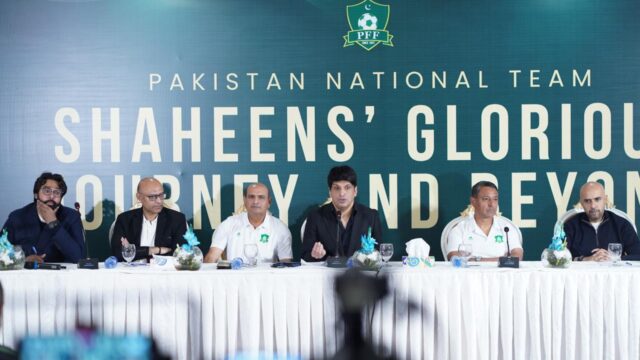
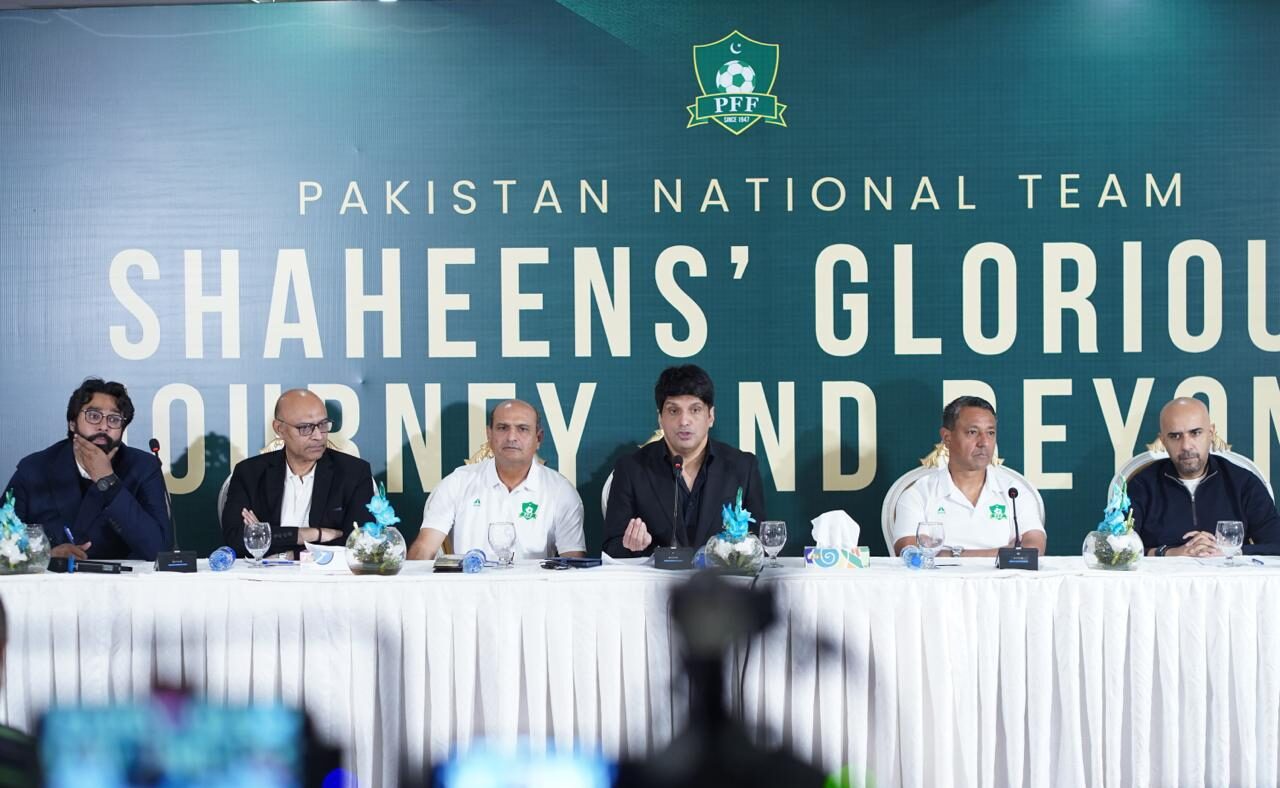
Speaking at a press conference titled “Shaheens’ Glorious Journey and Beyond”, Gilani outlined an ambitious roadmap centred on international participation, infrastructure investment, domestic competitions, talent identification and professional coaching. His message was clear: Pakistan must move beyond occasional achievements and establish a system capable of producing consistent international results.
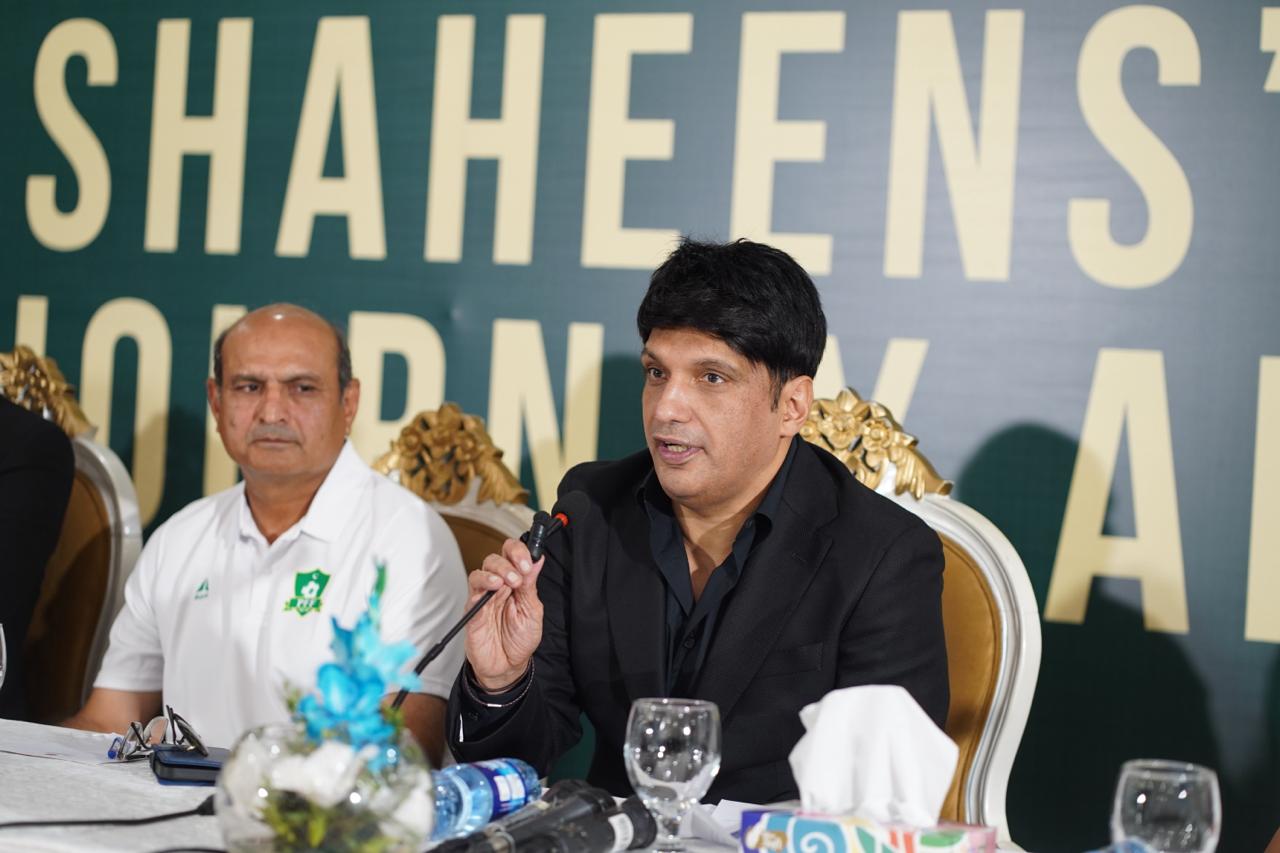
” Our most important objective is to raise Pakistan’s flag on the international stage. That is our purpose,” Gilani said, identifying five strategic priorities for the coming year.
Among the most pressing requirements is infrastructure. Gilani revealed that the federation was seeking investment worth tens of millions of dollars to improve football facilities, stressing that meaningful progress would remain difficult without suitable grounds, training centres and development facilities.
This is perhaps the most important challenge confronting Pakistani football. Talent exists across the country, but enthusiasm alone cannot produce international-standard players. Youngsters need quality pitches, qualified coaches, regular competitions and professional environments in which their abilities can develop.
The proposed National League and stronger domestic competitions are therefore particularly significant. Gilani wants players selected through competitive performances rather than relying predominantly on trials. Such a transition could encourage consistency, reward merit and give emerging footballers regular opportunities to demonstrate their potential.
Pakistan’s recent international performances provide reasons for cautious optimism. Reflecting on the SAFF Championship final in Dhaka, Gilani praised the players’ commitment and determination despite the disappointing defeat. He maintained that reaching the final under head coach Nolberto Solano was itself a historic achievement and should not be overshadowed by the result.
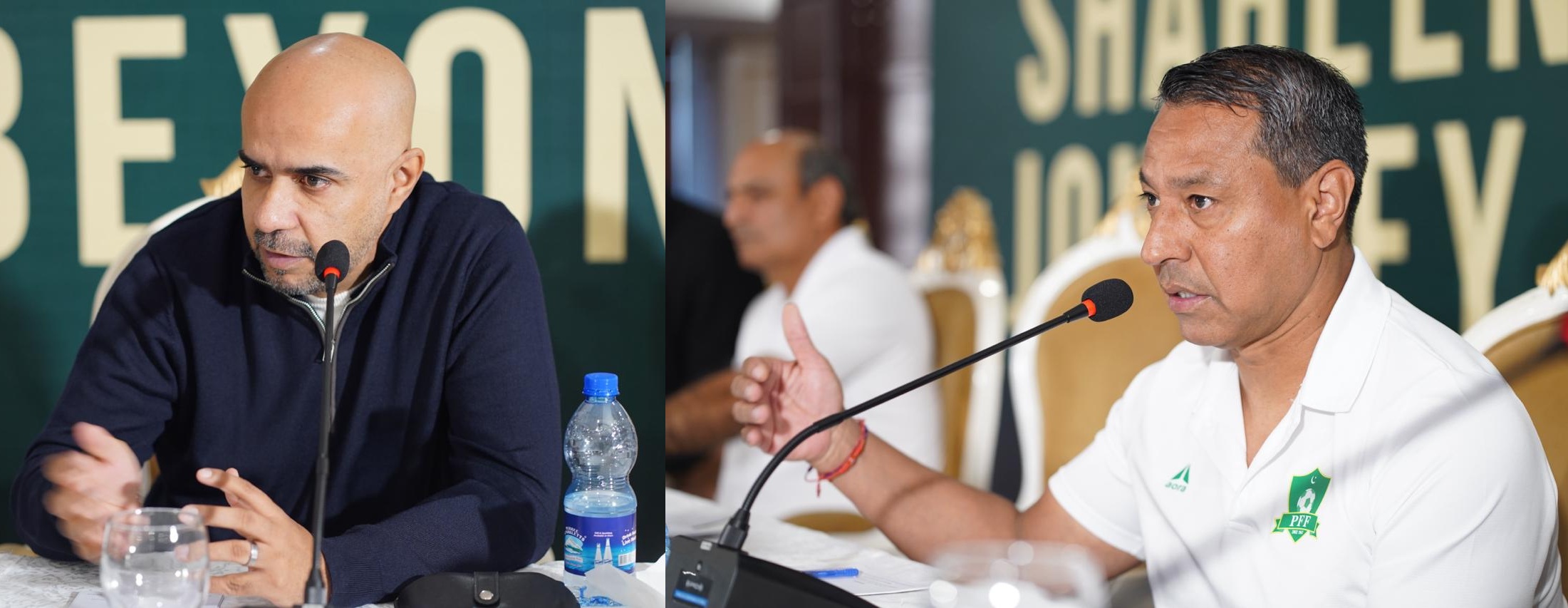
“We learn in defeats and we will come back stronger in the future,” he said, expressing confidence that the team’s upward trajectory would continue. He added that the players had given everything for Pakistan and deserved recognition for their efforts.
Another important issue addressed by the PFF president was the debate surrounding locally developed and diaspora footballers. Gilani firmly rejected distinctions based on players’ backgrounds, arguing that selection should depend on ability, commitment and merit. “Once a player wears the Pakistan jersey, he is neither local nor diaspora, he is a Pakistan player,” he emphasised.
This is a welcome approach. Pakistan needs to draw upon every available source of eligible talent while simultaneously strengthening domestic development. Internationally experienced players can raise standards, but a strong national team must also emerge from a competitive local football structure. These objectives should complement rather than compete with each other.
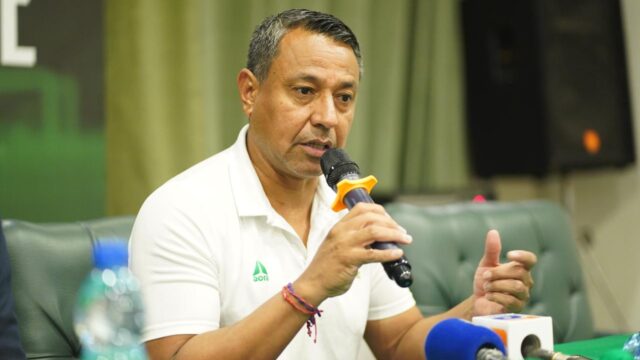
Head coach Solano echoed this philosophy, stating that any player holding a Pakistani passport and meeting the required sporting standard could be considered for selection. His immediate ambition is to guide Pakistan towards the group stage of the next FIFA World Cup qualifying campaign.
Youth development is another essential pillar. PFF Technical Director Adeel Rizki acknowledged that recent months had been exceptionally busy, with U-15, U-17 and senior teams participating in competitions. He stressed that the experience gained must now translate into improved development policies, infrastructure and governance.
Pakistan U-17 head coach Mohammad Habib also highlighted the importance of the AFC U-17 Asian Cup qualifiers in Laos, where Pakistan recorded two victories, one draw and one defeat. The National U-17 Championship has provided another platform for identifying promising players and encouraging merit-based selection.
Women’s football deserves equally serious attention. Gilani revealed that FIFA had approved the federation’s strategic plan for the women’s game. Despite financial limitations, Pakistan’s women’s teams participated in the FIFA Series and SAFF Futsal Championship in 2026, finishing fourth and third respectively.
The launch of U-16 and U-23 women’s leagues in three cities represents another positive development. Preparing a more comprehensive 2027 calendar, with greater international participation, could provide female footballers with a clearer pathway towards national representation.
PFF Chief Operating Officer Shahid Niaz Khokhar believes President Syed Mohsen Gilani’s vision has been central to Pakistan football’s progress over the past 18 months. However, vision alone cannot transform the game; it must be backed by professional administration, effective planning and consistent implementation. Khokhar said the federation was working to turn the president’s vision into practical measures, stressing that sustainable success would remain difficult unless administrative standards matched the leadership’s ambitions.
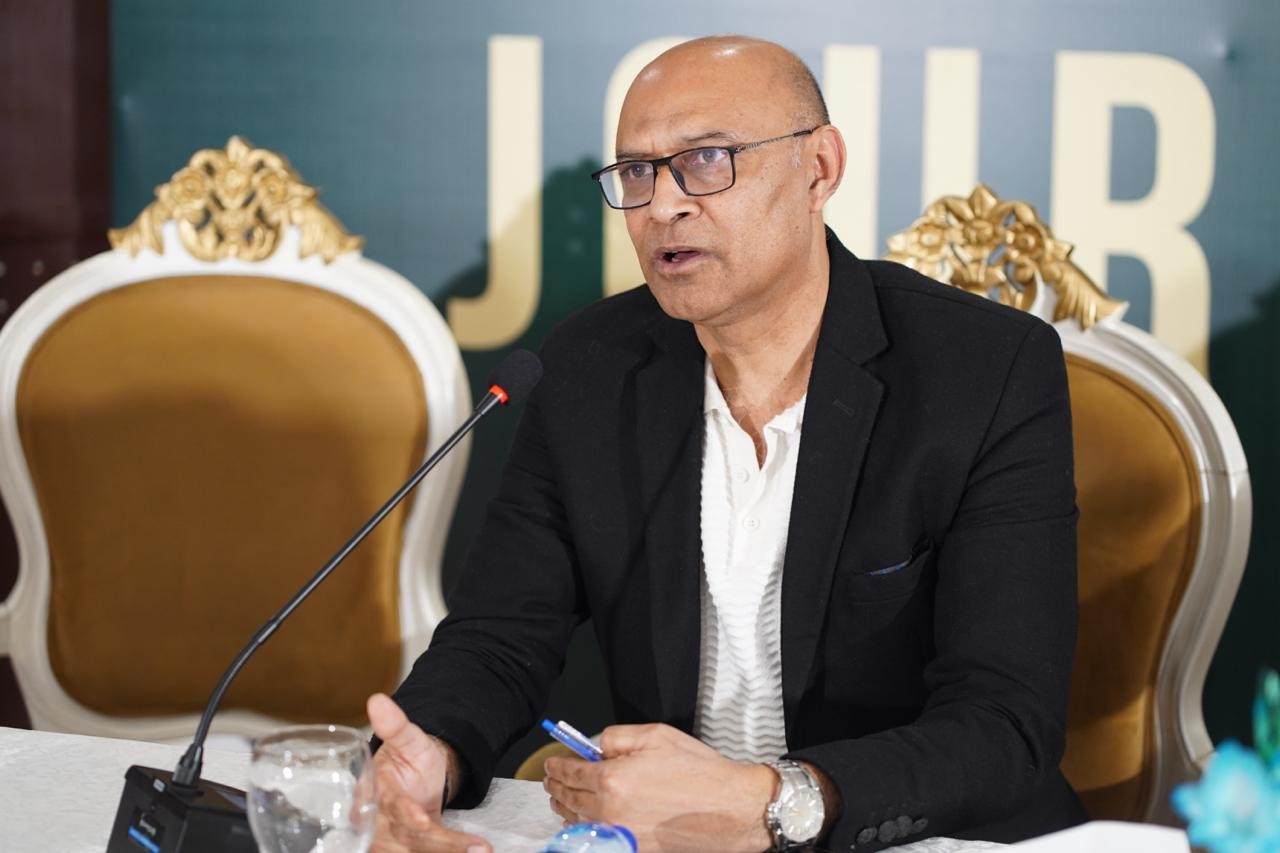
The federation must now demonstrate measurable progress through regular international fixtures, transparent selection, functioning domestic competitions, improved facilities and sustained investment.
Equally important is public support. Solano has urged Pakistani supporters to recreate the passionate atmosphere witnessed during the Bangladesh match at home fixtures. A strong football culture requires not only players and administrators but also enthusiastic supporters, sponsors, schools and communities.
Pakistan’s journey towards international football recognition will not be completed overnight. The SAFF final should be viewed neither as the ultimate destination nor as an isolated achievement, but as a foundation upon which something much greater can be built.
Gilani’s vision is ambitious, but its success will ultimately be judged by results: stronger domestic competitions, better-developed players, competitive women’s and youth teams, improved infrastructure and a national side capable of challenging established opponents.
Pakistan football does not merely need another memorable victory; it needs a system that makes victories possible, repeatable and sustainable. The real journey begins now.
sarfraznews12@gmail.com