

FootballPakistan.Com Editorial
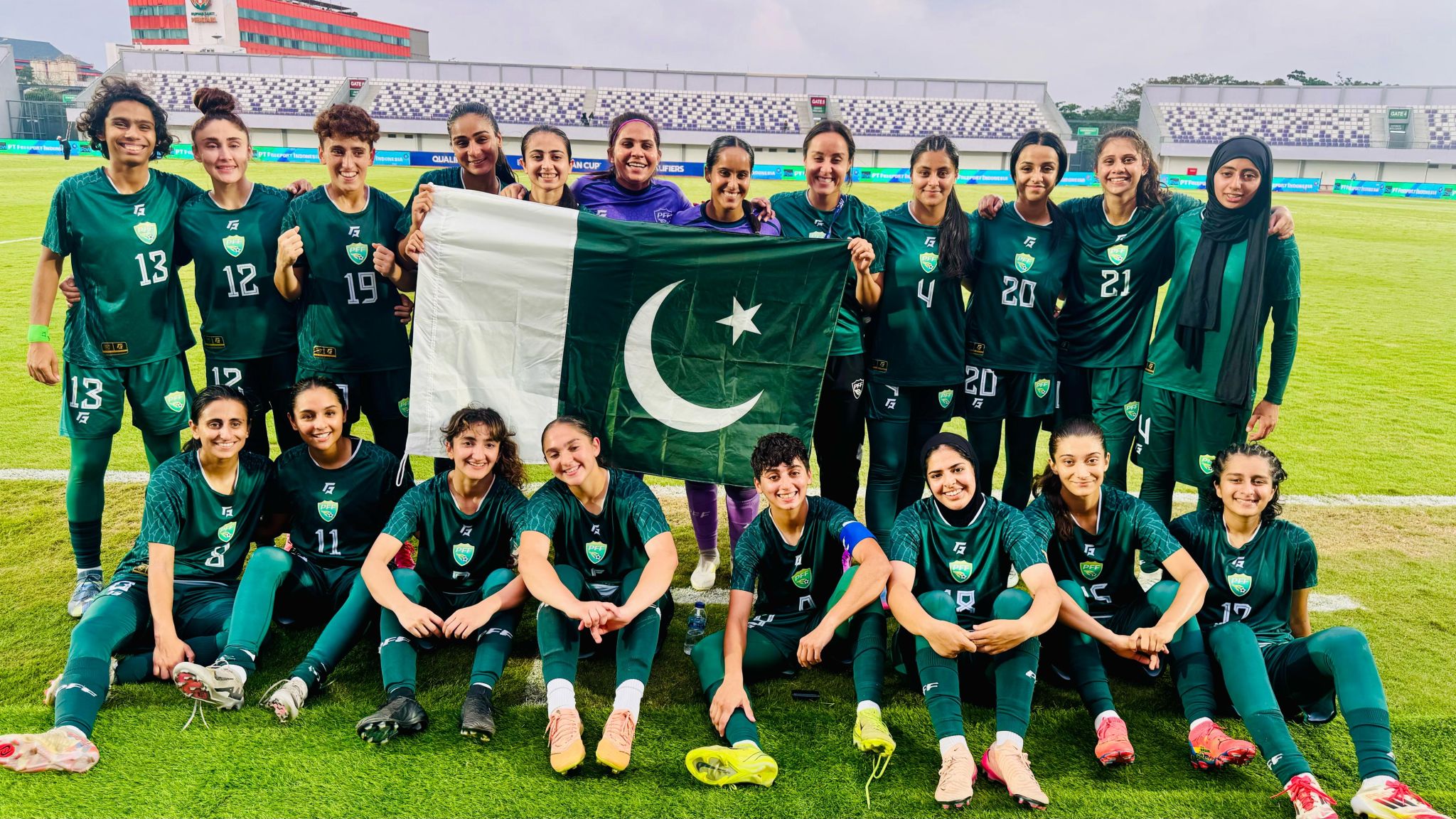
Pakistan Women’s National Football Team has been the talk of the town in recent weeks after their promising debut at the AFC Asian Cup qualifiers. The team caused upsets by defeating higher ranked host Indonesia and Kyrgyzstan; a remarkable comeback after the opening game horror show when Chinese Taipei mauled Pakistan 8-0.
The qualifiers saw Pakistani fans and public get to see new inductees show their quality. Layla Banaras has gone viral and rightly so, while Mariam Mahmood, Aqsa Mushtaq and goalkeeper Zeeyana Jivraj all impressed fans and stakeholders. Pakistan coming back with 6 points is a remarkable achievement considering the team hadn’t played in 7 months and only had 6 days of training in Islamabad. Their opponents had been playing regularly and training for lot longer.
This is something that needs to change immediately. You cannot go into such events underprepared, especially when a little bit of better preparation could yield far greater results.
Many within Pakistani football have been wondering what’s next for this team and Pakistani women’s football. The answer is simple. Pakistan can do a lot, if there’s vision and ambition. Recent recruitment has shown that the team has raised the bar and the performances against Indonesia and Kyrgyzstan are proof. The potential is huge for this women’s national team which can inspire a whole nation into taking up the sport and reaching previously untapped areas.
This is something the newly elected PFF must take seriously. Right appointments must be made for head of women’s football and then establish a proper women’s football development plan. Pakistan needs a Women’s Football Strategy for the next 4 years and a long-term plan that emphasises development, academies, national competitions (national/regional leagues), and senior and junior national teams.
Pakistani women’s football has lost a lot of opportunities over the last decade and fell behind. Recruitment of overseas Pakistani talent has helped the WNT catch up with regional sides to an extent, but only at senior level. Pakistan has had no junior WNTs since 2018; the only time Pakistan ever formed age group girls’ teams.
It is high time to re-establish these age group teams because they are critical for the development and progression of players from junior to senior international football. 2025 could have been a huge year for age group teams but lack of funds and the lengthy transition post-elections has kept Pakistan Women’s age group teams out of SAFF and Asian events.
The senior women’s national should also get dedicated management around it to prepare for international events. A long-term aim should be qualification for the 2035 FIFA Women’s World Cup. But short-to-medium term goals must include qualification for the 2029 AFC Women’s Asian Cup and winning the SAFF Women’s Championship. These senior WNT ambitions should be backed by similar aims for age group teams at SAFF and AFC level.
Setting up a national level competition for women which provides regular games and competitive environment is an immediate need. The current National Women’s Championship isn’t the solution. It merely lasts a few weeks and sees mismatched fixtures, while arbitrarily giving its winning team a seat in the PFF Congress – something that should be addressed constitutionally.
Women’s football is in a different situation because it isn’t department centric like men’s football in Pakistan. Many women’s clubs/academies exist and if they are provided proper financial and technical support, they will excel.
Currently, women’s football remains confined to a handful of major cities – mainly Islamabad, Lahore, Quetta and Karachi. Initially facilitating these parts of the country is vital to ensure the women’s game sustains and then further spreads.
Pakistan’s geography also poses a challenge for a national league which requires home and away games travel – both for men’s and women’s. A good idea can be splitting the national women’s league into 2 zones: North and South. This would cut down travel time and costs for teams, allowing players to remain local, working/studying during the week and playing on weekends.
It will have to start as amateur / semi-professional for the initial years. With right support and pathway to professionalism, the league can become sustainable.
So, for Pakistan to build on the recent wins, the Women’s National Team must get back to playing regular international football and climb up the FIFA rankings whilst laying down foundations for domestic football.
There are 2 FIFA international women’s windows remaining this year, October and November. Will the PFF finally make use of these windows or not, remains to be seen. Failure to do so will only stall the progress and dampen the momentum the girls built after its results in Indonesia.